





challenge
yourself
TRUST THE PROCESS
Small daily actions shape your future. Learn how consistent habits and tracking what truly matters can help you turn your goals into reality. Daily habits can build long-term success.
There is a version of success people love to talk about. The highlight reel. The breakthrough moment. The “everything changed overnight” story. But that version is rarely real. What is real… is repetition, is discipline, is showing up on the days you don’t feel like it.
Nobody wakes up motivated every day. Nobody enjoys doing the hard things daily. And yet — that’s exactly what creates results. Discipline is not emotional. It is structural. It’s what you do when motivation disappears. And that is where most people quietly stop.
" Everyone wants to be Cristiano Ronaldo…
but discipline is the hard part. "
"I can give you the map… Do you think you will do it? It’s difficult. Discipline is the most difficult thing — not only in sport, but in life. You have to challenge yourself to be consistent. Sometimes it’s hard. People say, ‘You go to the gym every day?’ Of course not. Nobody likes going every day. But you have to do it."
I realized something…discipline isn’t about motivation. It’s about having a system you can return to — even on the days you don’t feel like it. And that’s the part nobody wants to admit. It’s not exciting. It’s not fast. And most of the time…it feels like nothing is working.
I’m not a “success story.”
I’m still building. Still figuring things out and still moving forward — slowly. And honestly… a lot of people would have quit by now. But maybe that’s the point. Maybe success doesn’t come fast for everyone. Maybe for some of us… It’s built in quiet days, repeated over and over again.
It is easy to stay committed when results are visible. It is much harder when nothing seems to be changing. When effort feels invisible. When progress feels slow. When doubt starts to speak louder than discipline. This is where most people quit. Not because they lack ambition. But because they cannot see their progress clearly enough to trust it.
And I understand why many people give up here.
Because it would be easier to stop than to continue in silence.
But maybe success was never meant to be fast for everyone.
Maybe for some of us, it is built differently.
Quietly.
Gradually.
Through repetition, most people never see.
The hardest part isn’t knowing what to do.
It’s showing up
when you don’t feel like it.
When there’s no validation.
no results.
no momentum.
Because in the end, discipline isn’t about being perfect. It’s about not stopping.
Even when it’s slow. Even when it’s hard. Even when nobody is watching.
That’s why I created the Personal Tracker. Not for perfect days. But for the days you don’t feel like showing up — and do it anyway. This is not to track perfect routines. I created it to make progress visible — even on the slow days. Because most people don’t fail from lack of goals…
...they fail because they can’t see themselves improving.
You can look at this Personal Tracker as a:
✔ discipline mirror
✔ consistency proof system
✔ identity builder
prove yourself
you didn't quit
today.
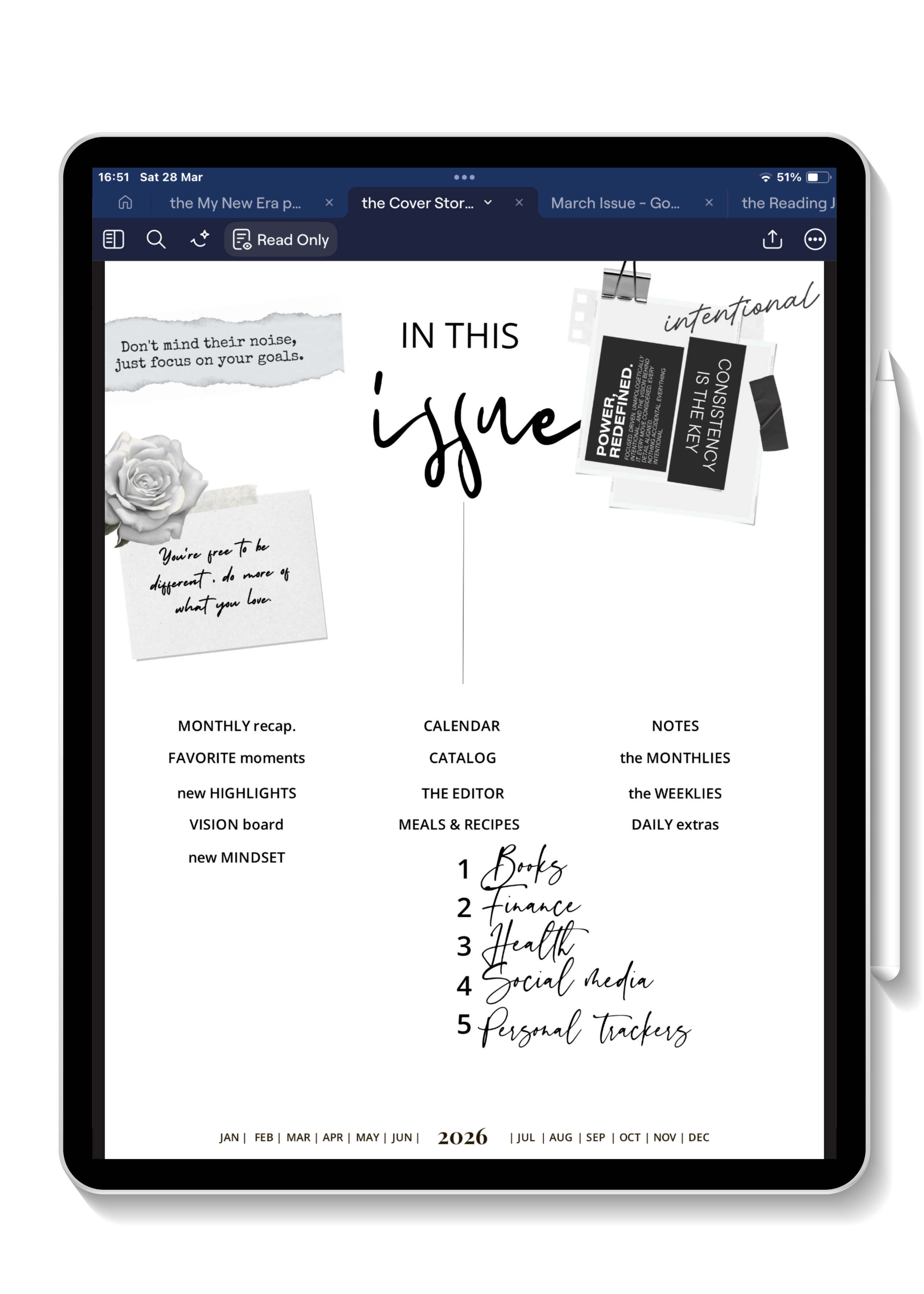
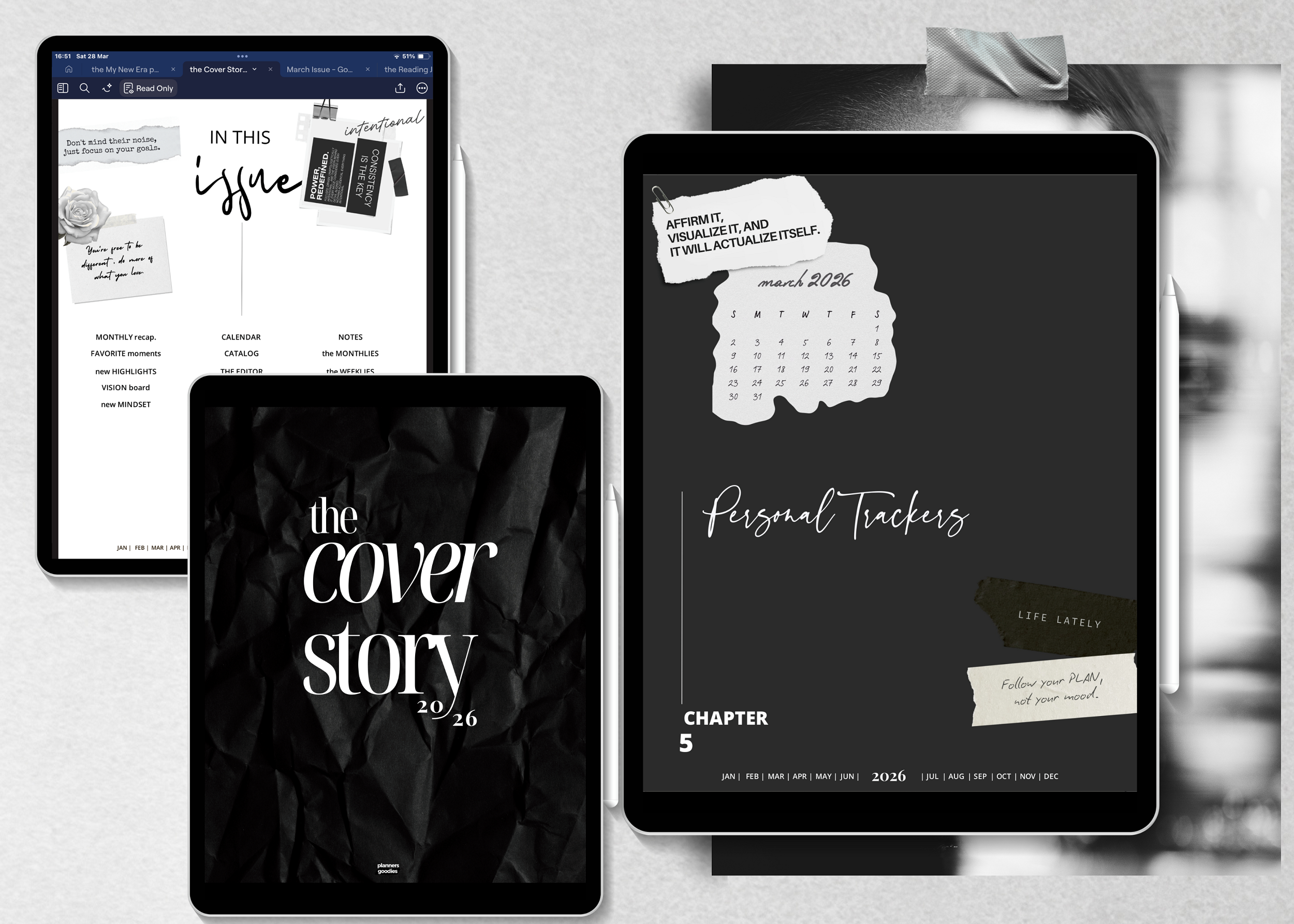
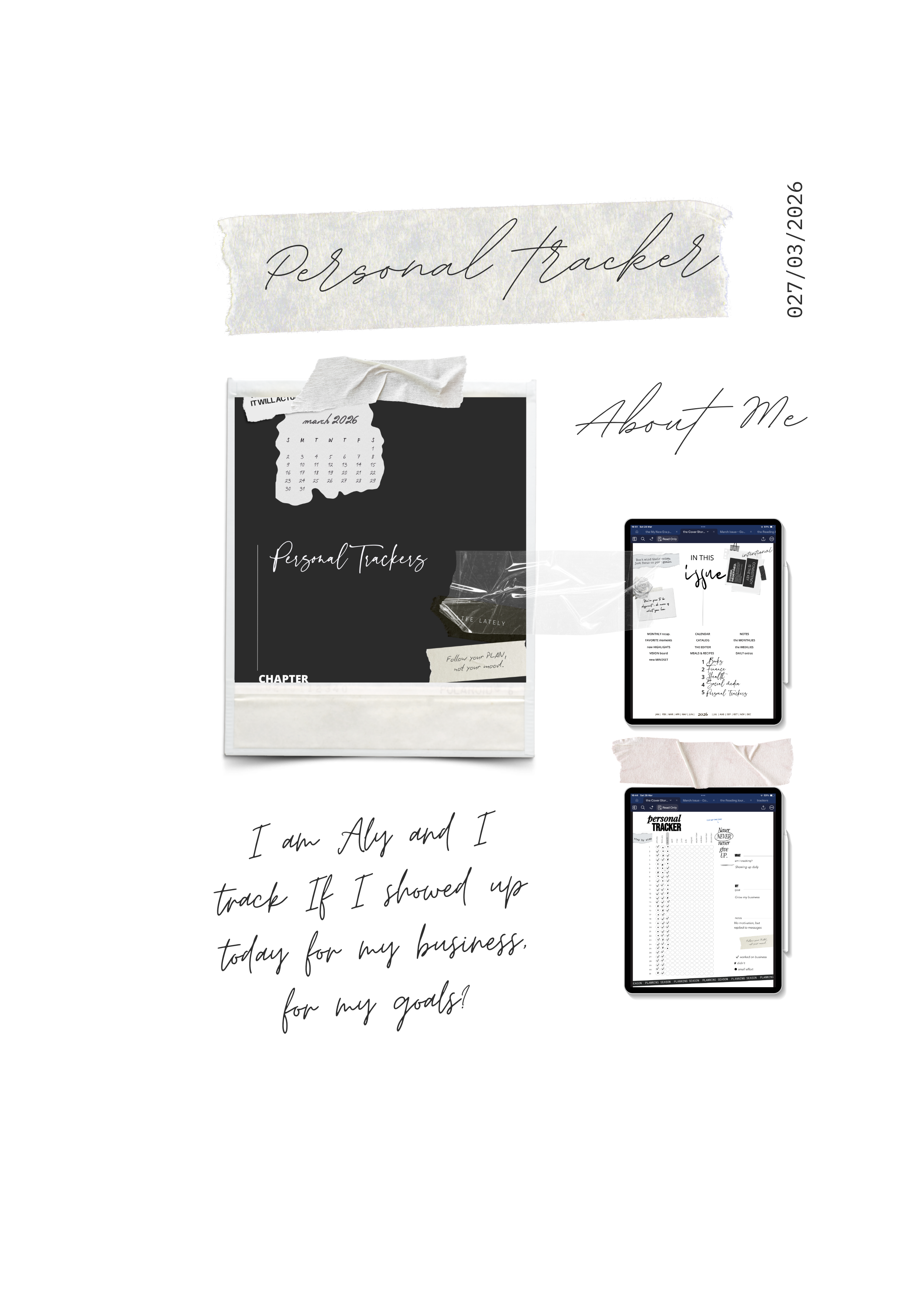
I open my digital planner — currently, The Cover Story.
I go straight to the Index page. Not just a simple page, but the structure behind everything. A place that gives me instant access to where I need to be.
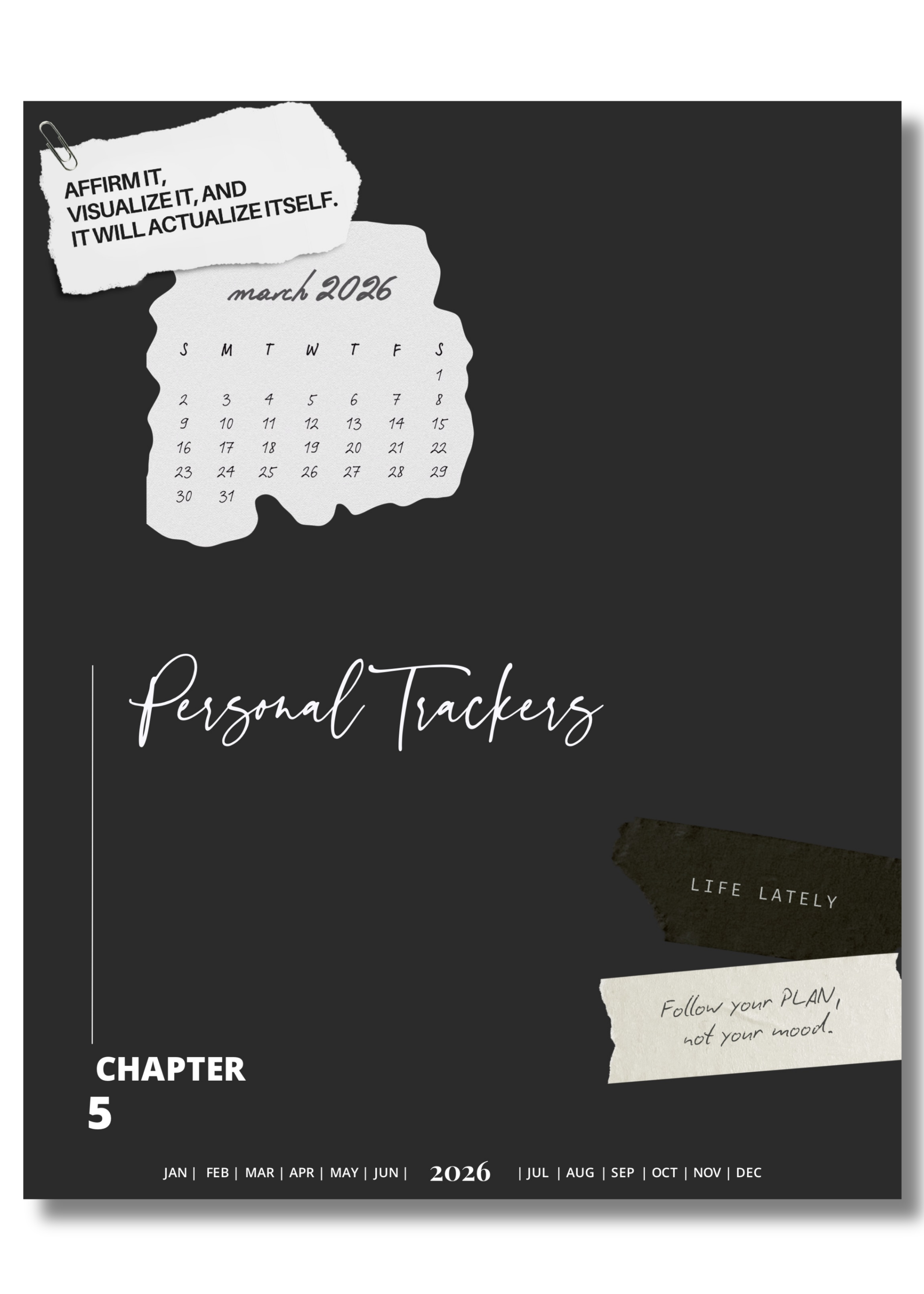
From there, I move to Chapter 5 | The Divider.
The space I intentionally chose to hold something different — not plans, not ideas, but proof.
Proof of consistency.
Proof of showing up.
This is where it changes
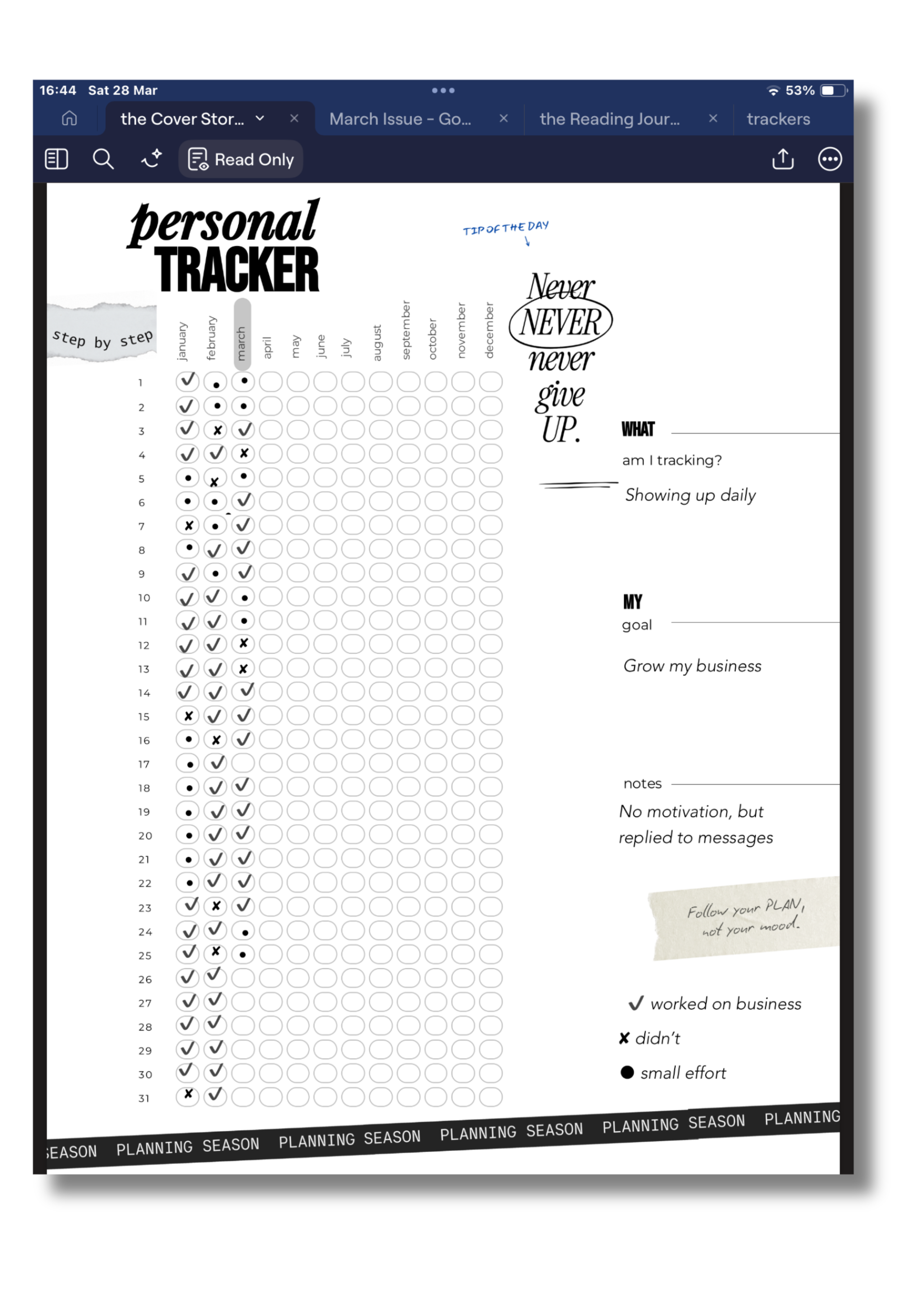
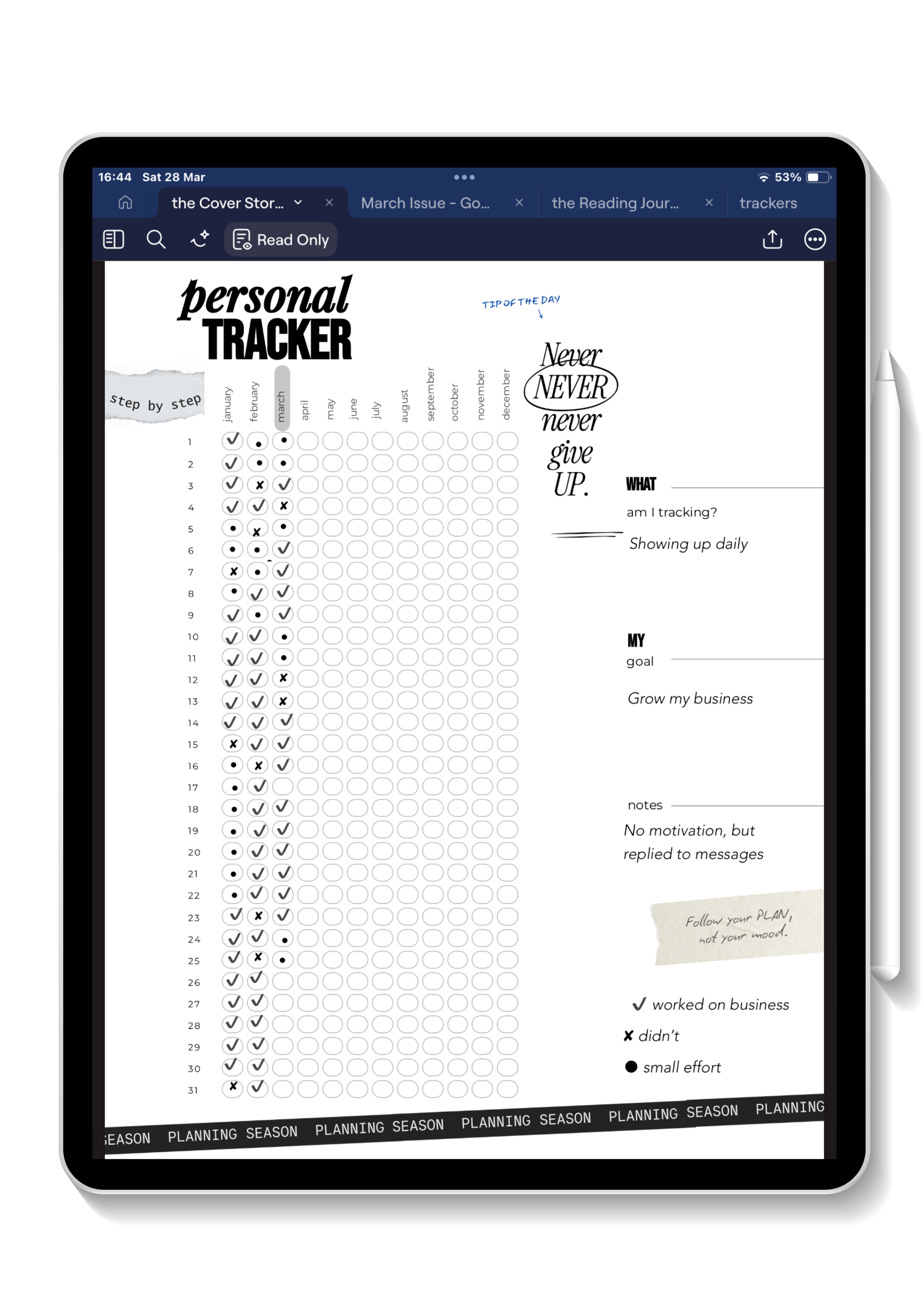
I open my Personal Tracker.
And what I track might seem… simple. Maybe even STRANGE. I Don’t Track Perfection. I don’t track hours. I don’t track how productive I was. I don’t track perfect routines.
I track one thing:
Did I show up today?
That’s it.
It doesn’t matter if I worked 5 hours or 20 minutes.
It doesn’t matter if it felt productive
or messy
or slow.
What matters is this:
Did I show interest in what I’m building?
Did I move, even slightly, in that direction?
Because this is the truth
Most people don’t fail because they lack time.
They fail because they stop showing up.
Quietly.
Gradually.
Unnoticed.
This Is Why I Track It
Not to measure success.
But to make sure I don’t lose sight of my own goals.
NEED NOTES?see you in the next blog post.
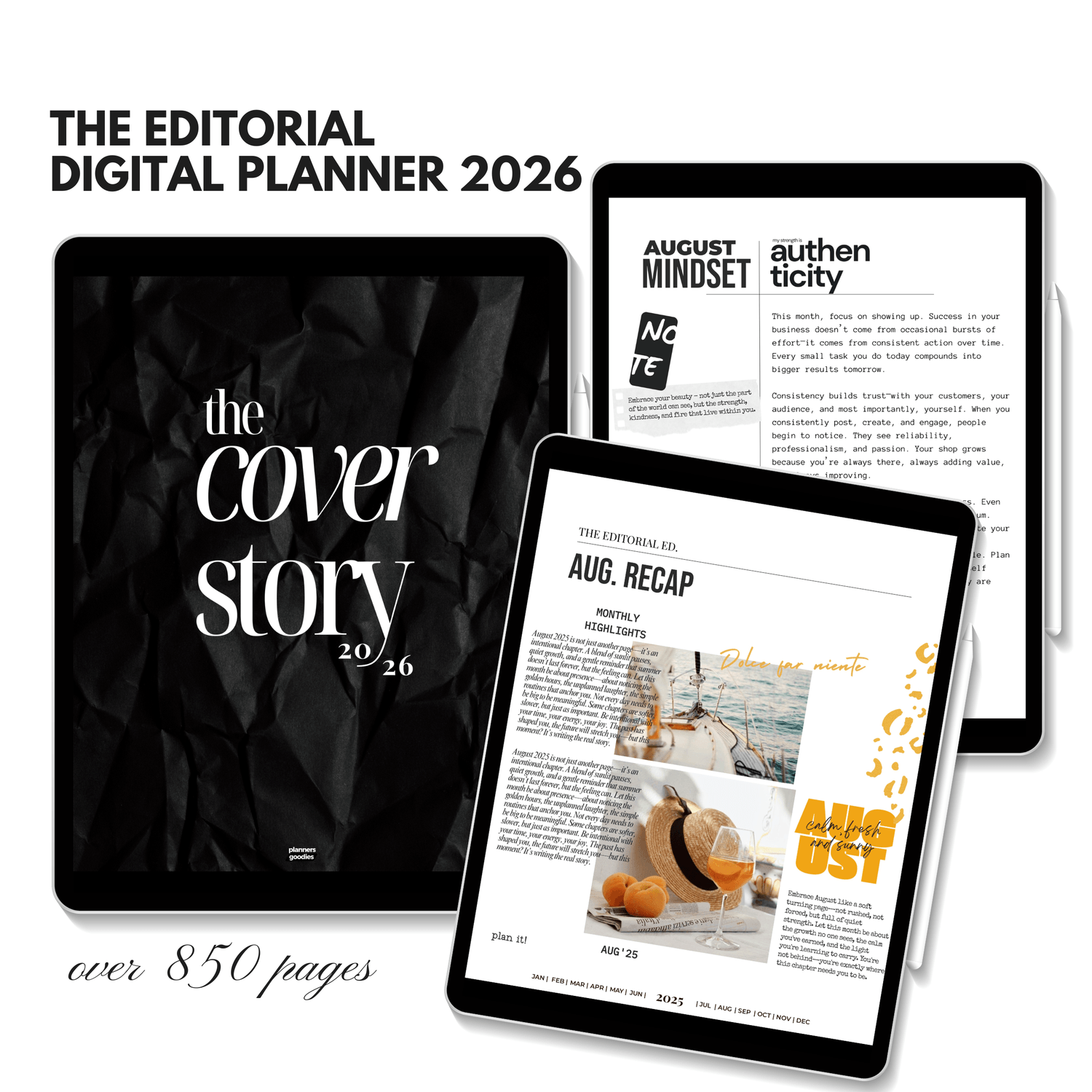
2026 Premium Editorial Digital Planner – ADHD-Friendly, Daily & Dated, Monday–Sunday
Set your goals for the month.
Create your vision board.
Define your priorities with intention.
Cross off what no longer serves you.
And plan your months and weeks with clarity.
Plan. Focus. Structure. Intention. A space for minimalist digital planning and beautifully organized living.